
Kitesurfing Incidents: A Guide for First Responders
For RNLI crews, lifeguards, ambulance, HEMS and coastguard teams attending a kitesurfing incident: what the equipment is, where the hazards are, and how to make it safe. Equipment facts from BKSA and IKO published material; sources linked at the bottom.
In a coastal emergency
Call 999 or 112 and ask for the Coastguard
For someone in danger in the water or on the shoreline, ask for the Coastguard, not just "ambulance". The Coastguard coordinates lifeboats, lifeguards and rescue helicopters. On VHF, use Channel 16.
Understanding kitesurf equipment
One kite, four lines, a bar, a quick release, a leash, a harness and a board. Know the seven parts before you reach the casualty.
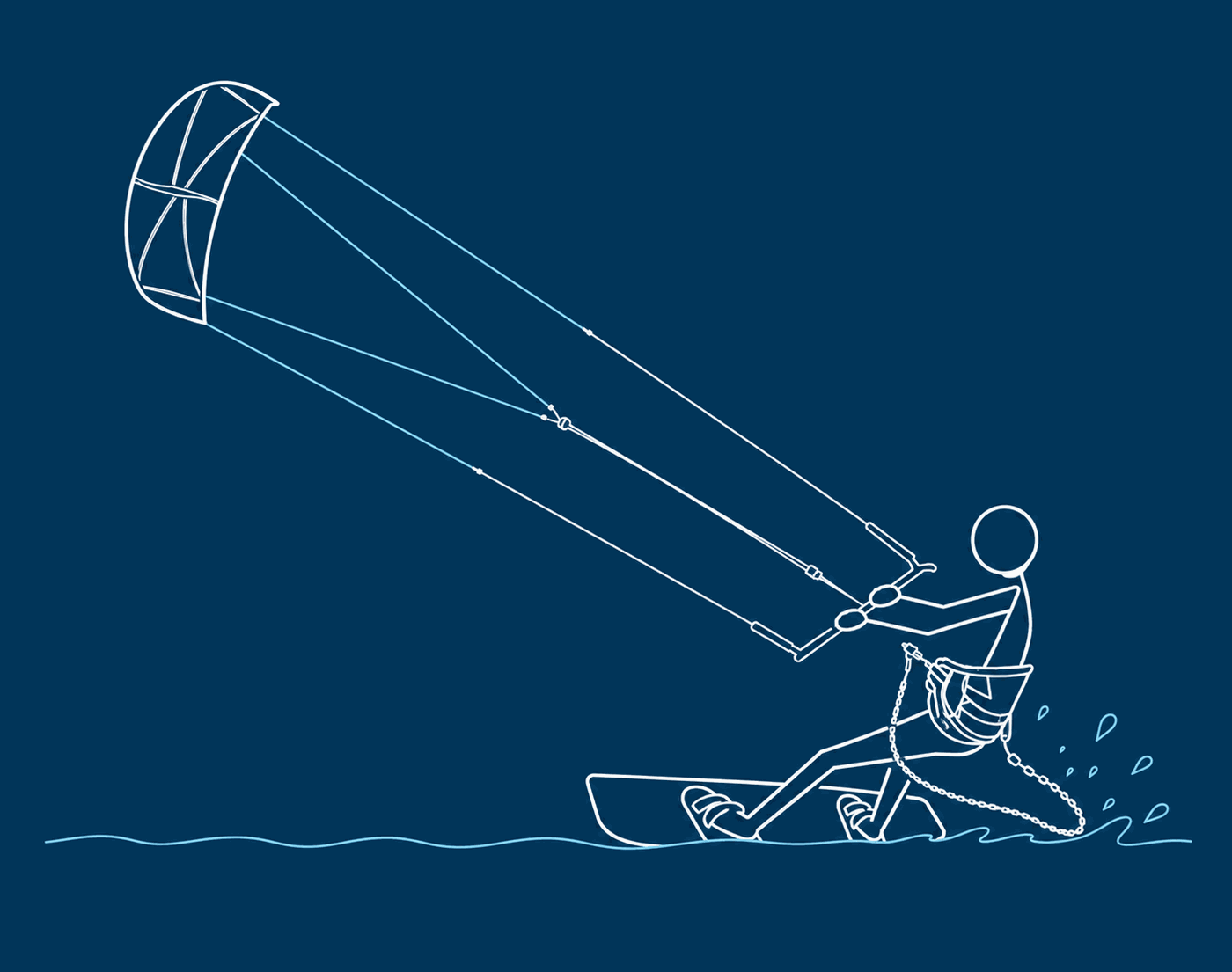
- Kite
- Flying lines
- Control bar
- Quick release
- Safety leash
- Harness
- Board
What you'll find on the casualty
A harness with a hook at the front, a chicken loop and leash clipped to it, 20 to 25 metres of near-invisible line, and a board that is usually somewhere else.
- Harness, chicken loop and leash. A harness around the waist or seat with a metal hook or spreader bar at the front. The kite attaches to it via the chicken loop (a rubber-coated loop at the hook) and, separately, a safety leash. Harnesses open with ordinary buckles or velcro; they can also be cut.
- The lines, and a separate board. 20 to 25 m of near-invisible line (up to 40 m) between the rider and the kite: thin, non-stretch and extremely strong. The board is usually not attached to the rider and may be some distance away.
- Wetsuit, helmet and impact vest. A thick neoprene wetsuit, which slows heat loss and adds buoyancy but must be cut for chest access, and the chest dried before defibrillator pads go on. A helmet and impact vest may be worn.
Scene hazards
A loaded line cuts like cheese wire, and a downed kite is not a safe kite. Deal with the kite before you approach along the line path.
- Never grab or step over lines under tension. A loaded kite line cuts like cheese wire. Deal with the kite before approaching along the line path.
- A downed kite is not a safe kite. Inflatable kites hold their shape and can re-power without warning in a gust, dragging whatever is attached to them, including a casualty. Assume any kite still connected to lines is live.
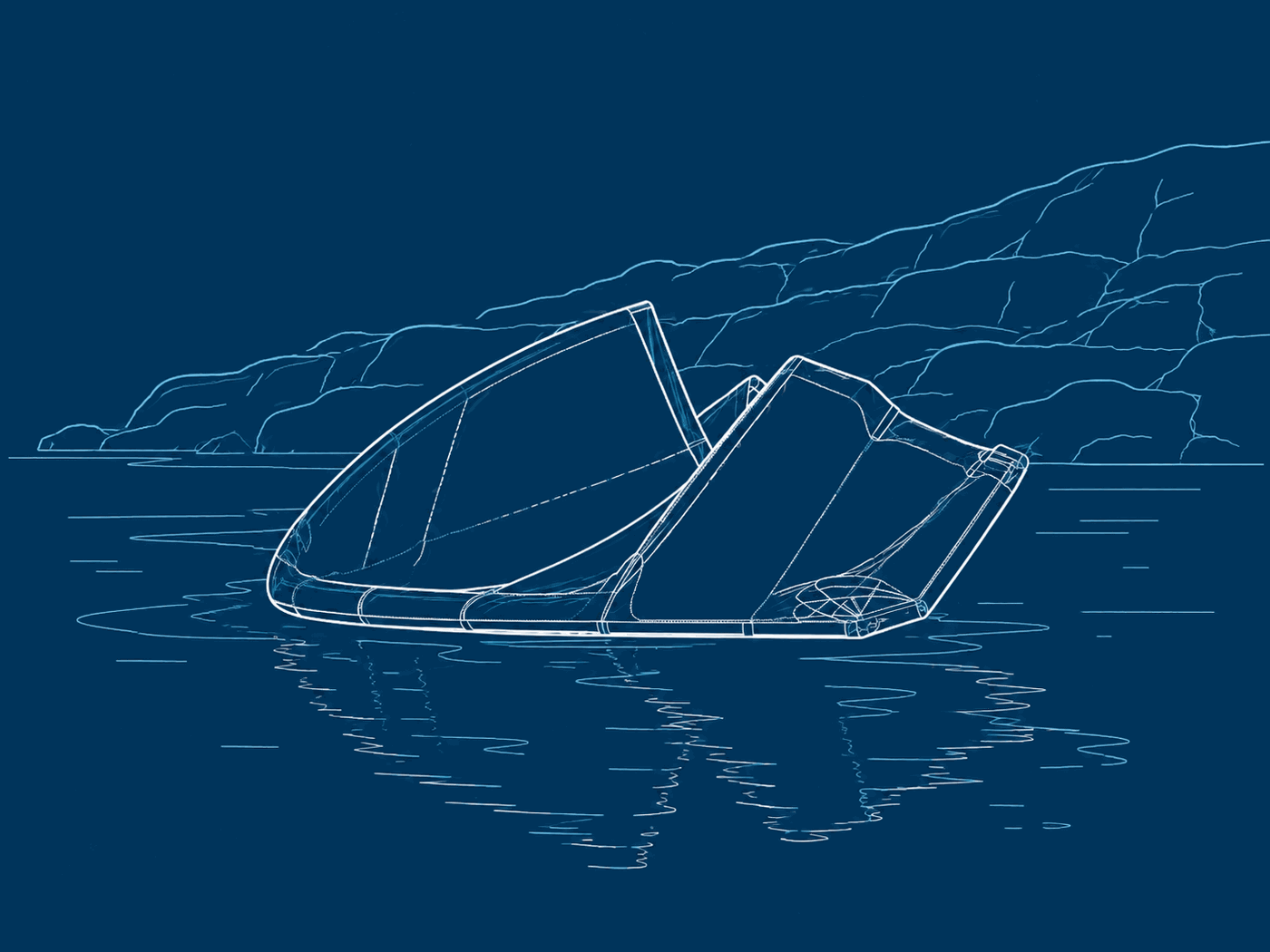
Making a kite safe
Casualty still attached: the quick release at the chicken loop, then the leash release. Loose kite: go for the canopy, never the lines.
- If the casualty is still attached. The quick release is on the chicken loop, directly in front of the harness hook. Pushing or pulling its collar (designs vary, but it is built to be obvious and one-handed) "flags" the kite onto a single line and dumps nearly all its power. A second release where the safety leash meets the harness separates the rider from the kite completely.
- A loose kite on the beach. Approach the canopy, not the lines. Weight the centre of the canopy down with sand, or kill it fully by opening the inflation valve on the leading edge and letting it deflate. Many riders carry a line cutter in the harness if lines must be cut; cut well away from the casualty.
Air ambulance and helicopter operations
Downwash launches kites. Before the aircraft arrives, deflate or bury every kite on the beach and clear a 25 by 25 metre landing area.
- Landing area. A HEMS helicopter needs roughly a 25 m × 25 m clear area to land, and bystanders clearing the space quickly makes the difference (London's Air Ambulance guidance).
- Kites and rotor wash don't mix. Downwash will lift and launch any rigged or loosely secured kite on the beach. Before a helicopter arrives: deflate kites or bury canopy edges in sand, and clear boards and loose gear from the landing area. An airborne kite with 25 m of line is a serious hazard to the aircraft.
Riding here yourself? The pre-session checklist, your safety system, Float to Live and bystander first aid are in the guide for kitesurfers.
Sources and further reading
Equipment facts from BKSA and IKO; rescue and first-aid guidance from the RNLI, St John Ambulance and London's Air Ambulance. Read the originals.
- RNLI: kitesurfing safety advice (opens in new tab)
- RNLI: Float to Live (opens in new tab)
- British Kitesports (BKSA), the UK governing body (opens in new tab)
- IKO: safety systems and self-rescue (opens in new tab)
- St John Ambulance: drowning first aid (opens in new tab)
- London's Air Ambulance: helping a helicopter land (opens in new tab)
- HM Coastguard (Maritime and Coastguard Agency) (opens in new tab)
This page is an educational summary compiled from the linked organisations' published guidance. Spotted an error? Please get in touch.